Pillar 1
Women and Education
Demanding gender-transformative curricula, eliminating stereotypes, and securing access to STEM and digital skills for marginalized girls.
Area B: Education & Training of Women
An independent, civil society-led movement holding governments accountable to the undeniable commitments made to the women of this continent in the 1995 Beijing Declaration and Platform for Action — the most comprehensive blueprint for women's empowerment.
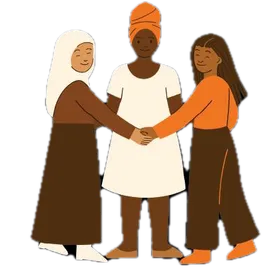
Three generations. One legacy. Shared leadership.
We have established the Beijing+30 African Women's Movement and intentionally retained "Beijing+30" as our permanent banner — a constant demand for accountability and a reminder of the undeniable commitments made to the women of this continent.
Over 30,000 activists converged in 1995 to draft a document that permanently codified women's rights as human rights. Today, as we face a coordinated, globally funded attempt to claw back these rights, we defend this consensus with the same uncompromising rigor with which it was drafted.
An Africa where gender equality is fully realized, where women and girls are undeniably empowered, and where their human rights are universally respected.
Our mandate is strictly informed by the BPfA and localized through powerful African frameworks, including the Maputo Protocol, the Solemn Declaration on Gender Equality in Africa (SDGEA), and the African Union's Agenda 2063.
Guided by a Governing Board (providing strategic direction and diverse representation), driven by a Secretariat, and operationalized through dedicated Thematic Working Groups built on the principle of subsidiarity — ensuring local community realities dictate continental advocacy.
A direct, modernized response to the 12 Critical Areas of Concern defined in the original Beijing Platform for Action — ensuring no aspect of women's lived realities is left behind.
The BPfA's Area L: The Girl Child is recognized as a cross-cutting imperative integrated across all seven Pillars.
Demanding gender-transformative curricula, eliminating stereotypes, and securing access to STEM and digital skills for marginalized girls.
Area B: Education & Training of Women
Formulating localized action plans and enforcing strict state accountability metrics to dismantle the systemic violence threatening women's lives and autonomy.
Area D: Violence Against Women · Area I: Human Rights
Ensuring women are not merely viewed as victims of conflict, but are actively placed at the center of peacebuilding, DDR, and state-building processes.
Area E: Women & Armed Conflict
Fiercely defending bodily autonomy, advancing Comprehensive Sexuality Education, and countering well-funded anti-gender movements attacking reproductive rights.
Area C: Women & Health
Dismantling structural barriers to economic participation, demanding equal pay, and pushing for inclusive growth through models like Social Business.
Area A: Women & Poverty · Area F: Women & the Economy
Utilizing strategic litigation to enforce the Maputo Protocol, tracking state compliance, and demanding equal representation in all tiers of governance.
Area G: Women in Power · Area H: Institutional Mechanisms · Area I: Human Rights
Securing land rights, advancing sustainable agricultural practices, and ensuring rural women lead in climate resilience and conservation efforts.
Area K: Women & the Environment · Area A: Women & Poverty
Amplifying the impact of the seven core pillars
Combating patriarchal narratives, elevating African feminist voices, and ensuring visibility for the Movement's shadow reporting across all platforms.
Area J: Women & the Media
The mobilization arm responsible for intergenerational dialogue, grassroots organizing, and coordinating cross-pillar advocacy at REC, AU, and UN levels.
Cross-Pillar Mobilization
20,000 women march to the Union Buildings in Pretoria — a defining act of resistance whose 70th anniversary we now approach, anchoring Africa's long and unfinished struggle for women's rights and dignity.
Over 30,000 activists converge on Beijing. The Fourth World Conference on Women adopts the Beijing Declaration and Platform for Action — permanently codifying women's rights as human rights.
The Protocol to the African Charter on Human and Peoples' Rights on the Rights of Women in Africa is adopted, becoming Africa's strongest legal instrument for women's rights.
Africa's Agenda 2063 and the UN Sustainable Development Goals align on gender equality as a cornerstone of development, setting measurable targets for the continent.
The Pan-African Parliament convenes a historic Special Sitting. The Beijing+30 African Women's Movement launches — a civil society-led platform uniting three generations to hold governments accountable and advance gender justice across the continent.
The imperative for united action is absolute. Join us in holding governments accountable, defending hard-won rights, and advancing gender justice and women's empowerment across Africa.